A Hall of Legends field entry. Beneath an ancient temple in the south of India lie six stone vaults, sealed for centuries, holding the accumulated offerings of a dynasty that ruled as the servants of a god. In 2011, a court ordered five of them opened — and out of the granite cellars came the single greatest treasure ever found: tons of gold, idols crusted with emeralds, sacks of diamonds, golden thrones, coins from a dozen empires, a hoard so vast that estimates of its worth run from twenty billion dollars into the trillions. And yet the most famous chamber of all has never been opened. Vault B, the last cellar, is sealed behind a door carved with serpents and bearing no bolt or lock — guarded, the legend says, by a mystical serpent-binding, and cursed to bring ruin on any who force it. This is the story of the Padmanabhaswamy Temple: the richest treasure on earth, and the one door no one dares open.
In the city of Thiruvananthapuram, in the Indian state of Kerala, stands a temple to the god Vishnu that is older than memory — and beneath its floor lie granite vaults that held, until very recently, a secret almost beyond belief. For centuries the kings of Travancore had ruled as the humble servants of the temple’s deity, and for centuries they and countless pilgrims had poured offerings of gold and jewels into the sealed cellars beneath the sanctuary, until those vaults held a concentration of treasure unmatched anywhere on the planet. In 2011, by order of India’s highest court, five of the six vaults were opened for the first time in living memory, and the world saw a fortune that defied comprehension. But the sixth vault — Vault B, sealed behind a door of serpents — was left untouched, as it has been for over a century, because legend holds that to open it would unleash catastrophe. This is the richest treasure on earth, and the door no one will open.
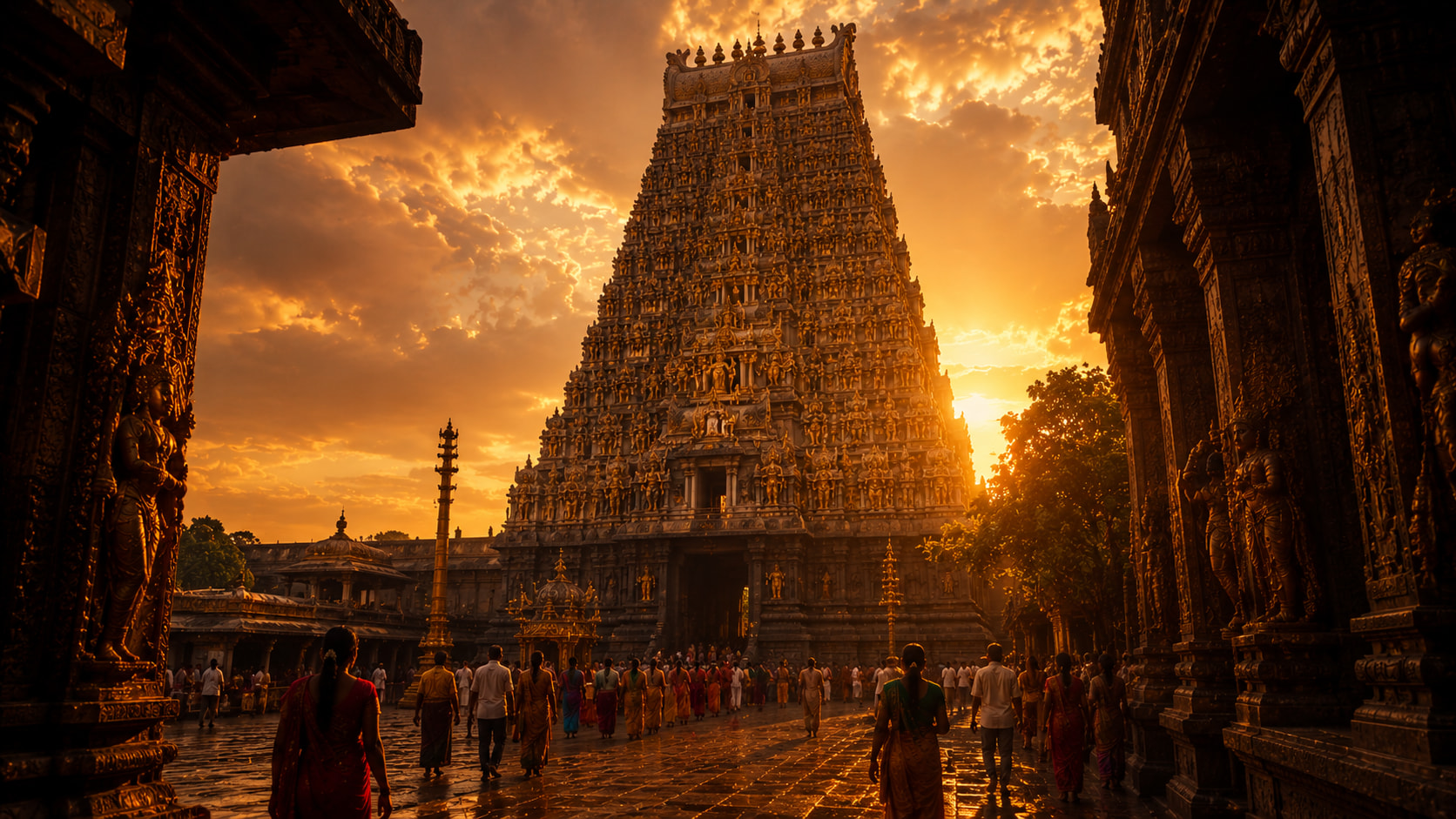
The legend — the richest treasure on earth
The treasure of the Padmanabhaswamy Temple is unlike almost every other legend in this hall, because it is not lost at all — it is found, catalogued, and real beyond any doubt. What makes it a legend is its sheer, staggering scale, and the one part of it that remains a genuine mystery. The treasure discovered beneath the temple in 2011 is considered the largest collection of gold and precious stones ever found in one place in the history of the world — a documented fact, not a rumor. And alongside that proven, almost unimaginable wealth sits a true unsolved enigma: the sealed Vault B, never opened in modern times, its contents unknown, its great door bearing the image of serpents and, by tradition, no lock at all. The Padmanabhaswamy Temple offers the rarest combination in all of treasure lore: a hoard so real it has been weighed and inventoried, and a sealed chamber so mysterious that the highest court in India hesitated to open it.
The temple of Padmanabha
At the heart of the story is the temple itself, dedicated to Vishnu in the form of Padmanabha — the god reclining on the cosmic serpent — and counted among the holiest shrines of Vaishnavism, one of the 108 sacred Divya Desams praised in Tamil hymns more than a thousand years old. For centuries the temple was bound up with the royal house of Travancore, whose kings famously ruled not in their own name but as “Padmanabha Dasa” — servants of the god — dedicating their kingdom and its wealth to the deity. This was the engine that filled the vaults: generation after generation of Travancore kings, together with devotees and pilgrims, offered gold, jewels, coins, and precious objects to Lord Padmanabha, and that wealth was sealed away in the temple’s cellars as the property of the god, accumulating across the centuries into a treasure beyond reckoning. The temple was, in effect, a sacred treasury that took in offerings for hundreds of years and never paid them out.
The reclining god
At the center of everything is the deity himself, and the sight is extraordinary. The presiding image of Padmanabha is a vast reclining Vishnu, some eighteen feet long, lying in cosmic sleep upon the coils of the great serpent Anantha (Adi Shesha), whose hooded heads rise protectively over the god. The idol is so large that it can be viewed only through three separate doors — the face and chest through one, the mid-body and the navel-lotus from which the creator Brahma emerges through the second, and the feet through the third. It is fashioned, by tradition, from over ten thousand sacred saligrama stones carried from the Gandaki River in Nepal, bound together and coated in a special ayurvedic plaster, and adorned with gold. That the temple’s chief image is a god sleeping on a serpent is no small detail when it comes to the treasure: the serpent runs through everything here, from the deity reclining on Anantha to the cobra-carved door of the sealed vault below. At Padmanabhaswamy, the snake is not a threat to the treasure but the very form of the divine that owns it.
The granite vaults
Beneath the temple lie its famous kallaras — granite vaults or cellars, six of them in the reckoning that became famous, labeled A through F. Over the centuries these chambers became the repositories of the temple’s accumulated wealth, sealed and largely undisturbed, their contents known only by tradition and old estimates. Some of the vaults (C through F) had been opened from time to time over the years for the temple’s ceremonial needs; Vault A had possibly been entered in recent decades; but Vault B stood apart — believed unopened since the 1880s, the largest of all the cellars, and the subject of the deepest legend. What none of the vaults’ guardians could have anticipated was that, in the 21st century, a legal dispute over the temple’s administration would lead India’s highest court to order the cellars opened and their contents counted — and that the counting would reveal the richest treasure on earth.
The offerings of centuries
The vaults filled because a kingdom gave itself away. In 1750, the great Travancore king Marthanda Varma performed the Thrippadi-danam — he formally surrendered his entire realm to Lord Padmanabha and thereafter ruled only as the god’s steward, the Padmanabha Dasa, “servant of Padmanabha.” Every conquest, every tax, every triumph of the state was from then on offered in the deity’s name, and the wealth flowed to the temple rather than the crown. To this royal river of gold was added the offerings of countless pilgrims and devotees over many centuries, and the tribute and trade of a prosperous coastal kingdom that dealt in spices, ivory, and gold with the wider world. Nothing was ever meant to leave: the cellars took in the sacred wealth and sealed it as the property of the god, generation after generation, with no thought of spending it. That is how a single temple came to hold the greatest treasure on earth — not through a conqueror’s plunder, but through three centuries of a dynasty and its people giving their finest to a sleeping god, and asking nothing back.
The opening of 2011
The vaults were opened because of a lawsuit. A petitioner named T.P. Sundararajan brought a legal challenge concerning the control and security of the temple’s wealth, and the case rose to the Supreme Court of India, which in 2011 ordered an inventory of the temple’s vaults to document exactly what they contained. A court-appointed team was assembled, and in the summer of 2011 they descended into the granite cellars beneath the temple and began, vault by vault, to open chambers that had in some cases been sealed for generations. What they found as they worked through Vaults A and C through F stunned India and the world — and turned a quiet Kerala temple into the site of the greatest treasure discovery ever recorded. But one vault, the largest and most legendary, they did not open.
What they found
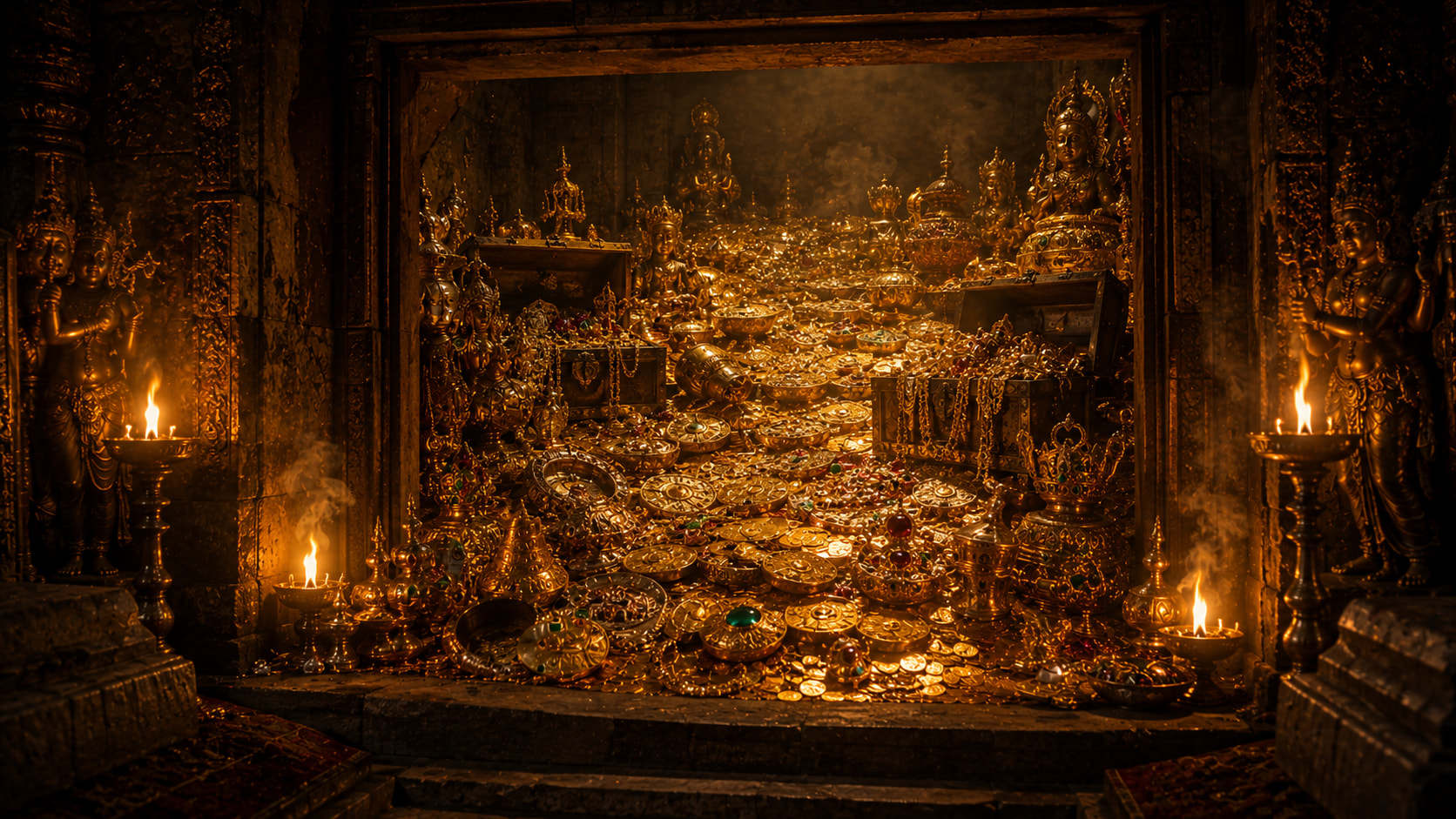
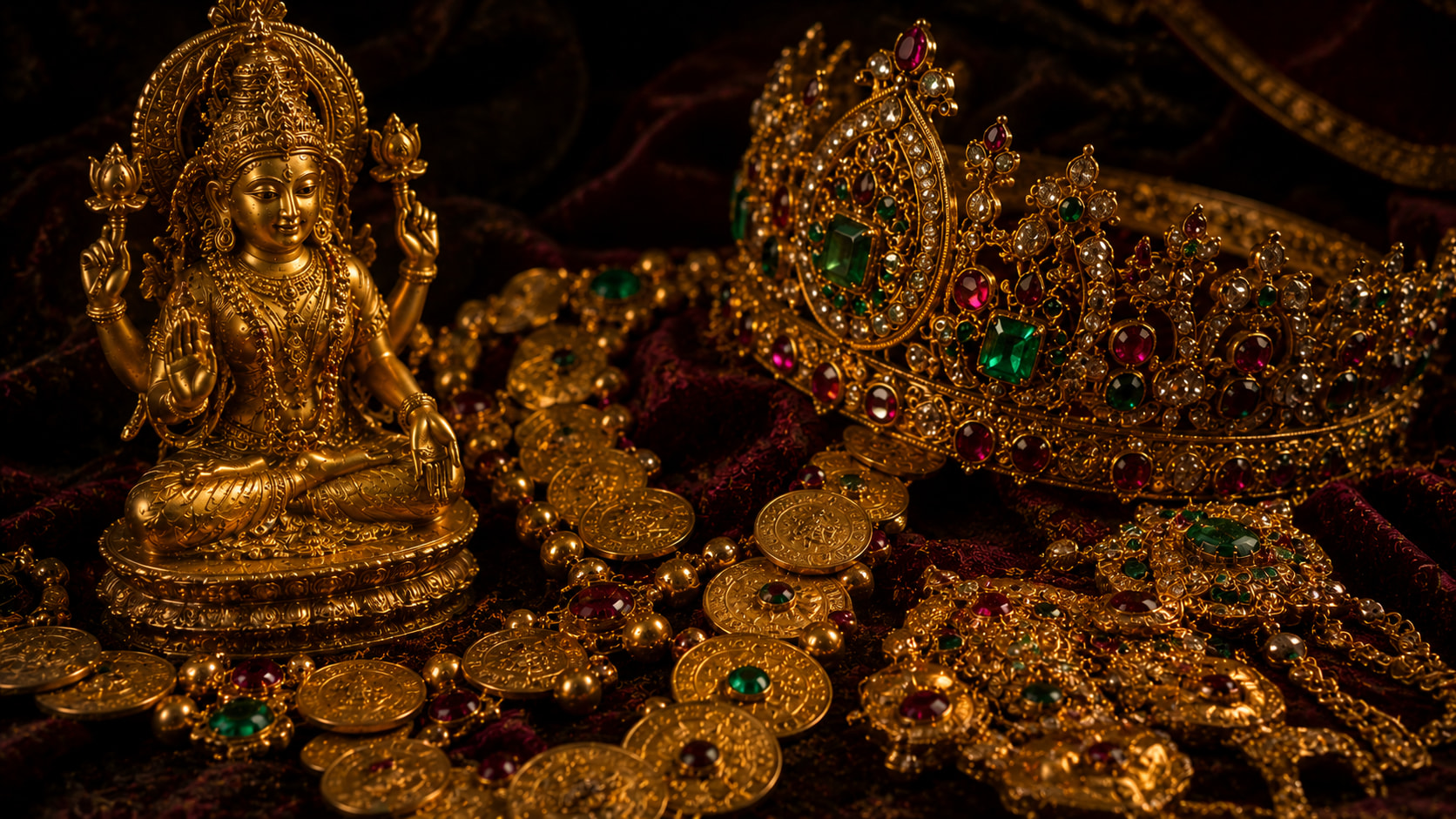
The inventory revealed a hoard that beggars description. Out of the vaults came tons of gold — gold coins by the sackful from many eras and empires, solid gold idols, golden ceremonial objects, a gold throne, golden coconut shells, chains, crowns, and ornaments; sacks of diamonds and precious stones; antique coins of immense numismatic value; and sacred images studded with emeralds and rubies, including a magnificent jewel-encrusted idol of Vishnu. The accumulated offerings of centuries lay heaped in the granite cellars, and as the scale became clear, estimates of the treasure’s worth climbed into the tens of billions of dollars — commonly cited at well over twenty billion, with higher estimates, especially counting the unopened vault, running toward the almost mythic figure of a trillion dollars. By the assessment that followed, the treasure of the Padmanabhaswamy Temple was the largest collection of gold and precious stones ever found in the history of the world. And the most legendary chamber had not even been opened.
The sealed Vault B
Vault B — its traditional name the “Mahabharata Kallara” — is the largest of all the temple’s cellars, and the only one of the six that remained unopened through the 2011 inventory. It is the heart of the mystery. Old estimates hint at the scale of what it may hold: by one reckoning attributed to the Travancore Royal Family in the 1880s, the wealth in Vault B was already worth a colossal sum (cited as INR 12,000 crore in the values of that era) — and that was nearly a century and a half ago. If the five opened vaults yielded the largest treasure ever found, Vault B, by far the largest cellar and sealed the longest, is widely believed to contain even more. But no one has counted it, because no one has opened it — and the reason why takes the story out of the realm of pure wealth and into the realm of legend, faith, and fear.
The serpent door
The door of Vault B is the stuff of legend. By tradition, it is a great stone door bearing the carved image of serpents — cobras — and bearing no bolts, no latches, and no visible means of opening. Legend holds that the vault was sealed by a “Naga Bandham” — a mystical serpent-binding, a spell or mantra invoking the power of snakes — and that it cannot be opened by ordinary force or mechanism at all. Only a holy man of the highest spiritual attainment, the tradition says, chanting the correct sacred mantra (the “Garuda Mantra,” invoking the divine eagle that is the eternal enemy of serpents), could lawfully and safely open the door. To attempt to break in by physical force, the legend warns, would violate the serpent-seal and call down disaster. It is one of the most striking guardian-legends attached to any treasure in the world: a vault sealed not by lock and key but, in the belief of the faithful, by the power of snakes.
The Garuda and the serpent
The seal on Vault B draws on one of the oldest rivalries in Hindu myth: the eternal enmity of the Nagas, the divine serpents, and Garuda, the great eagle who is Vishnu’s own mount and the sworn devourer of snakes. If the door is bound by a Naga Bandham, a serpent-spell, then only the opposing power — the Garuda Mantra, invoking the eagle — can lawfully undo it, and only in the mouth of a sadhu of the highest attainment. It is a perfectly balanced piece of sacred design: the treasure guarded by snakes, the key held by their enemy, and both belonging to the god who sleeps on a serpent above. Over the years, holy men and self-proclaimed adepts have claimed that they alone knew the mantra to open the door safely, and the debate has run hot between those who see the seal as literal spiritual protection and those who read it as a dramatic expression of the simple truth that some sacred things should not be disturbed. Either way, the mythology has done what no lock could: it has kept the greatest unopened vault on earth firmly, faithfully shut.
The curse
With the serpent door comes the curse. Tradition holds that forcing Vault B open against the serpent-binding would bring catastrophe and misfortune — upon the temple, upon those who opened it, perhaps upon the land itself. This was no abstract fear in 2011: the petitioner whose case had led to the opening of the vaults, T.P. Sundararajan, died not long after the inventory began, and to many that death seemed to confirm the warning that disturbing the temple’s treasure carried a terrible price. Whether one sees the curse as genuine spiritual danger, as devout reverence for a sacred space that should not be violated, or as folklore, it has had a very real effect: it has helped keep Vault B sealed. The combination of religious sanctity, legal caution, and the dread of the serpent-curse has meant that the one chamber everyone most wants to see remains, to this day, exactly as it has been for well over a century — closed.
The court and the royal family
The fate of the temple and its treasure became a long legal saga. After the 2011 inventory, the Supreme Court of India treated Vault B with extreme caution, effectively designating it a kind of forbidden zone and deferring any decision to open it amid the swirl of religious sentiment, legal argument, and the question of who should control the temple’s staggering wealth. In 2020, the Supreme Court issued a major ruling upholding the Travancore royal family’s role in the temple’s management, through an administrative arrangement overseeing its affairs while respecting its religious traditions. Through all of it, Vault B has remained sealed. The courts, for all their authority over the discovered treasure, have not ordered the serpent door broken — leaving the Mahabharata Kallara as perhaps the most famous unopened door on earth, holding an unknown fortune behind a barrier of stone, serpents, and sacred dread.
Where it stands today
The Padmanabhaswamy Temple remains an active and deeply sacred place of worship, its discovered treasure held in trust as the property of the deity, guarded and largely kept from public display. And Vault B remains sealed — the serpent door uncracked, the Mahabharata Kallara’s contents still unknown, the question of what lies within unanswered after more than a hundred and forty years. The debate continues between those who believe the vault should be opened and inventoried like the others, and those who hold that the sacred serpent-seal must never be violated. Somewhere beneath the temple floor, behind a stone door carved with cobras and bearing no lock, may lie the single greatest concentration of treasure left unopened on earth — or a sacred mystery that the faithful believe must remain forever closed. The richest treasure in the world has already been found at Padmanabhaswamy. The greatest part of it may still be waiting behind the one door no one dares open.
Related legends
Temple of Jerusalem Treasures & the Menorah · The Temple at Delphi & Ancient Temple Hoards · The Gold of Angkor (Khmer Empire) · The Legend of Solomon’s Mines · Treasure Legends (General) · India
Sources & further reading
- The Sree Padmanabhaswamy Temple in Thiruvananthapuram, Kerala: a major shrine of Vishnu (Padmanabha), one of the 108 Divya Desams, and its association with the Travancore royal family (“Padmanabha Dasa,” servants of the god)
- The temple’s granite vaults (kallaras A–F) and the centuries of royal and devotee offerings sealed within
- The 2011 Supreme Court of India–ordered inventory (following the petition associated with T.P. Sundararajan) and the opening of vaults A and C–F
- The discovered treasure: tons of gold, idols, coins, diamonds and precious stones, golden thrones and ceremonial objects — assessed as the largest collection of gold and precious stones ever found, with value estimates from tens of billions of dollars toward a trillion
- Vault B (the “Mahabharata Kallara”): the largest cellar, unopened since the 1880s, and the old Travancore-family valuation of its contents
- The legend of the serpent door: the Naga Bandham (serpent-binding seal), the absence of bolts, and the tradition that only the Garuda Mantra can open it
- The “curse” warning of catastrophe, the death of petitioner T.P. Sundararajan in 2011, the Supreme Court’s caution toward Vault B, and the 2020 ruling on the temple’s administration
Weigh in
- The richest treasure ever found — and the biggest vault is still sealed. Should Vault B be opened?
- A door with no lock, opened only by mantra: legend, or a genuine ancient sealing technique?
- What do you think lies behind the serpent door of the Mahabharata Kallara?
- Curse, reverence, or coincidence — how do you read the warnings against opening Vault B?
Reply below — bring your view on the sealed vault, your estimate of what it holds, and your verdict on the serpent-curse. This is the Padmanabhaswamy Temple: the richest treasure on earth, already found — and the one door that India’s highest court would not open.