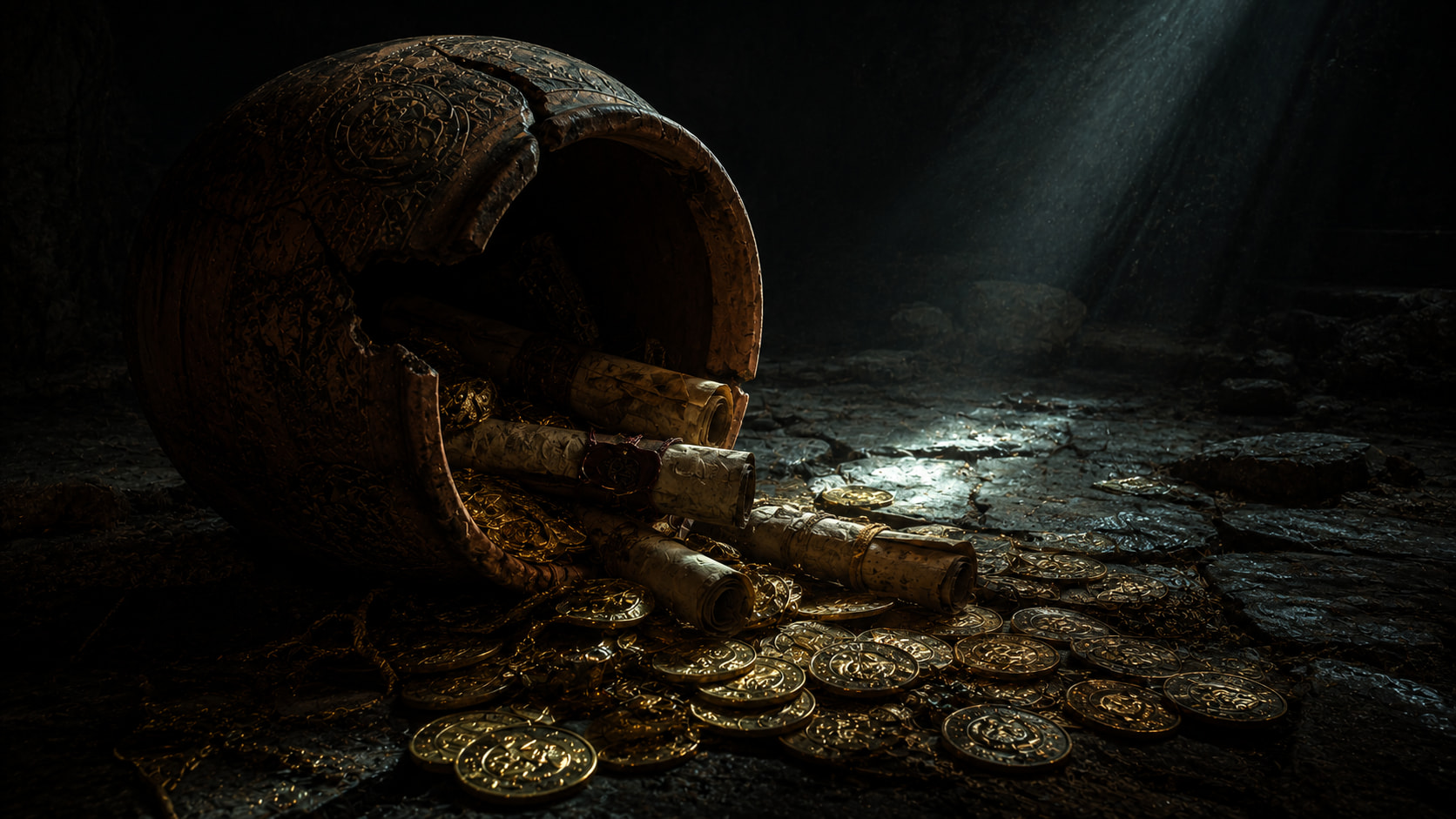
A site stays secret right up until the moment it does not. The leak is rarely a betrayal - far more often it is a small, ordinary mistake that someone else was patient enough to notice.
This room studies how secrets break so crew can keep their own from breaking. The goal is simple: help hunters protect a hard-won location until they are ready to reveal it on their own terms.
How leaks actually happen
Dramatic betrayals are the exception. Most leaks are mundane: a photo with the GPS tag left on, a background detail that identifies a hillside, a timestamp that pairs with a public check-in, a friend who “only told one person.” The pattern is almost always the same - a small disclosure, multiplied by someone else’s attention and time.
The compounding cost
A leaked site is not just a lost find. It can mean looting before a proper, lawful recovery; destruction of the archaeological context that makes a find meaningful; legal complications with landowners; and the collapse of trust within a crew. The cost is rarely paid all at once - it compounds quietly, the way the leak itself did.
The discipline of need-to-know
Serious hunters borrow a single idea from every security culture that has ever existed: need-to-know. Information goes only to people who genuinely require it, only when they require it. Vague is a feature. “Somewhere in the county” is a perfectly good public answer until the work is done.
Keeping your secrets
- Scrub metadata and revealing backgrounds before sharing.
- Decide in advance what is public and what is not, and hold the line.
- Treat group chats as semi-public; assume forwards happen.
- Reveal a site on your schedule, after the lawful work is finished.
Related rooms
- Internet Security Awareness - the toolkit for not leaking.
- Government Surveillance - the broader privacy picture.
- The Shadow Quarter - the wing this belongs to.
- Expedition Logs - where to share the story once it is safe to tell.
Your turn, crew: tell us about a near-miss - a time a secret almost slipped - and what you changed afterward. Keep the location out of it.